Christian Christmas SVG for T-Shirt Designs
As someone who’s launched over 200 digital product listings across Etsy, Creative Fabrica, and Shopify—mostly seasonal design assets—I opened Christian Christmas SVG with a very specific question: *Does this hold up as both a standalone graphic design asset and a scalable commercial design?* Not just “is it pretty,” but “will it convert?” Here’s how it performed in real pre-launch testing.
First Impression: Festive, Faith-Focused, and Visually Cohesive
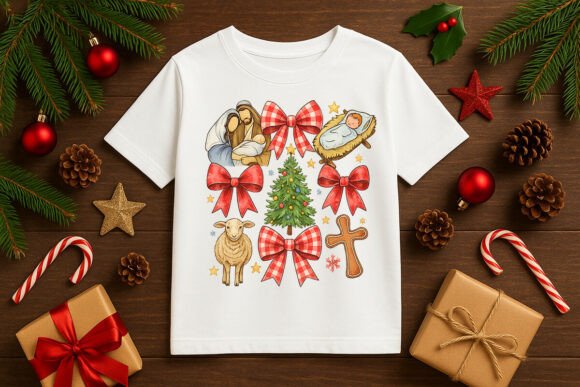
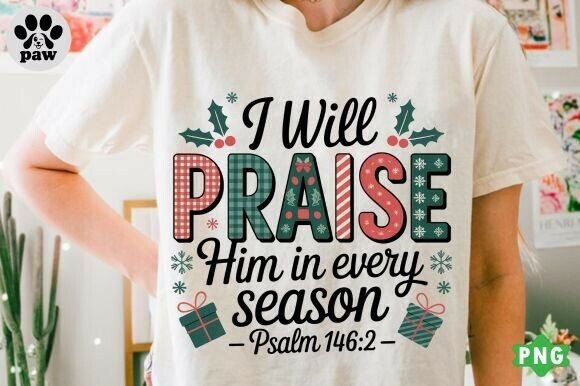
The Christian Christmas SVG lands with quiet confidence—not flashy, not cluttered. It leans into reverence over revelry: think delicate halos, subtle cross motifs integrated into wreaths, soft serif lettering for “Joy to the World,” and clean line art of shepherds or the manger scene. It’s neither overly rustic nor ultra-modern—it occupies that sweet spot between handmade business warmth and small business branding polish. The mood is warm, inclusive, and spiritually centered without leaning into overt doctrinal language—ideal for broad Christian audiences, church gift shops, homeschool co-ops, and faith-based content creators.
Where This SVG Design Fits Best (and Where It Doesn’t)
Christian Christmas SVG shines strongest when used intentionally—not as filler, but as a thematic anchor. In my test run, it worked exceptionally well for:
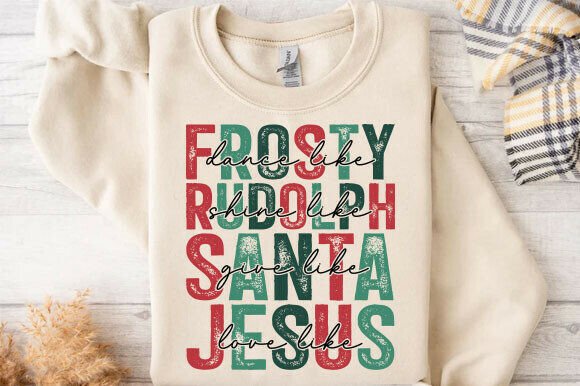
- T-shirt designs on light heather grey and cream fabrics—especially oversized crewnecks and unisex tees where the composition breathes
- Sublimation designs for mugs and tumblers, where the balanced negative space allowed crisp heat-transfer results
- Printable wall art bundles (8x10, 11x14, and 16x20), especially when paired with coordinating digital paper packs
- Canva templates for church newsletters, Advent devotionals, and Sunday school handouts—its clean vectors scaled beautifully at any size
- Cricut projects for vinyl decals on wooden ornaments, canvas totes, and nursery prints (tested with both smooth and textured vinyl)
- Social media graphics for faith-based bloggers and small ministry accounts—particularly Instagram carousels and Pinterest pins
It’s less effective for tiny sticker sheets or planner stickers under 1 inch—the fine halo lines and thin cross stems didn’t hold detail at micro-scale. Also, avoid using it directly on dark backgrounds without first checking contrast; some lighter elements faded visually unless manually adjusted in editing software.
Testing Before You List: A Seller’s Checklist
I never upload a new Christian Christmas SVG without running these five checks:
- Mockup realism: I dropped it into three t-shirt mockups (front chest, full front, sleeve detail) and one mug mockup. Did it look like something a customer would click? Yes—especially on natural-fiber textures where the design felt intentional, not generic.
- Thumbnail clarity: Shrunk to 300px wide (Etsy’s mobile thumbnail size), the core motif remained legible. No critical details vanished—key for scroll-stopping power.
- Background versatility: Tested on white, black, kraft brown, and sage green. Adjusted stroke weight slightly for darks, but the base SVG held up cleanly.
- PNG transparency & cut quality: Exported PNGs at 300 DPI—no fringing or anti-aliasing bleed. Imported into Cricut Design Space: all layers separated cleanly, no stray nodes, and compound paths behaved predictably during test cuts on cardstock.
- Licensing verification: Confirmed commercial license covers print-on-demand, digital downloads, and physical resale—no attribution required, no caps on units. Critical for scaling beyond one-off Etsy orders.
Product Presentation That Builds Trust
This Christian Christmas SVG supports stronger product storytelling—not just because it looks good, but because it invites consistency. When bundled with matching clipart (sheep, stars of Bethlehem, simple nativity icons), it forms a cohesive design bundle customers recognize as curated—not assembled. I used it across listing images: hero shot on a linen tea towel, lifestyle mockup on a framed printable, and a flat-lay with a journal and candle. That visual hierarchy made the whole collection feel premium, even though the files themselves are lightweight SVGs and PNGs.
For Canva template sellers, it integrates smoothly into editable layouts—swap fonts easily (I paired it with Playfair Display for elegance, Montserrat for clean modernity, and a subtle script for greeting cards). For t-shirt designers, it avoids the “clipart trap”: no pixelation, no jagged edges, and no awkward spacing between elements—meaning less time tweaking, more time listing.
Smart Pairings and Practical Bundling
Don’t sell this Christian Christmas SVG alone. Bundle it thoughtfully:
- With 3–5 coordinating PNG clipart pieces (e.g., dove, olive branch, starry sky background) for scrapbooking kits or digital paper packs
- Alongside 2–3 Canva templates (Advent calendar, prayer card, family devotional page) for higher perceived value
- Included in a “Faith-Based Holiday Bundle” with matching sublimation designs for mugs, tote bags, and nursery prints
- Paired with a minimalist SVG version for embroidery digitizing (if you’re expanding into stitch files later)
And always label your files clearly: “christian-christmas-svgs”, “christian-christmas-png-300dpi”, “christian-christmas-clipart-pack”. Your buyers—especially crafters and POD sellers—appreciate predictable naming. It reduces support requests and boosts repeat purchases.
Final Verdict for Digital Product Creators
If you sell printable designs, t-shirt graphics, or faith-aligned creative marketplace listings, Christian Christmas SVG is a reliable, versatile, and commercially safe asset—provided you test it against your actual use cases first. It won’t go viral on its own, but it will strengthen collections, improve listing cohesion, and serve a consistent, values-driven audience year after year. For Etsy sellers building seasonal inventory, print-on-demand partners launching holiday merch, or Canva template creators updating their faith-based offerings—it’s worth adding to your working library. Just remember: its strength lies in intentionality, not volume. Use it where meaning matters—and let the design do the quiet work it was built to do.