Christian Christmas PNG Design
A Designer’s First Glance: Warm, Reverent, and Ready for Stitching
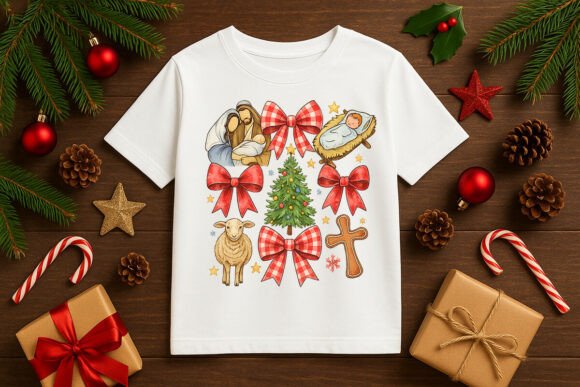
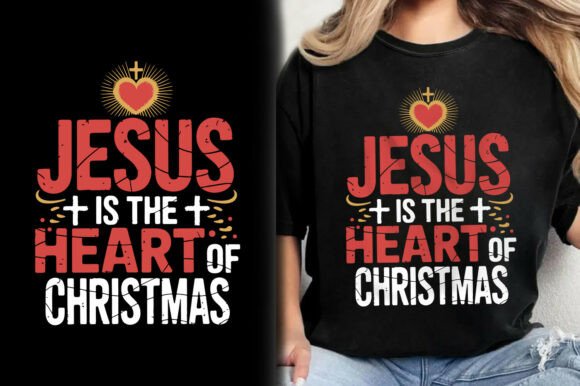
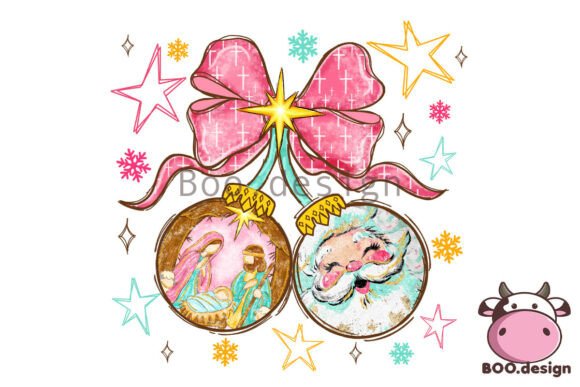
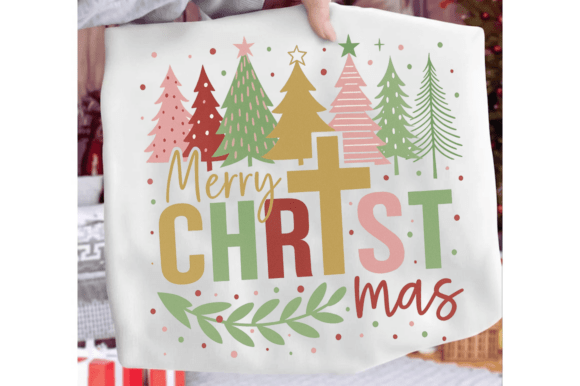
When I opened the Christian Christmas PNG Design, my first thought wasn’t “pretty”—it was “present.” The composition balances reverence with approachability: a softly centered cross intertwined with holly and subtle star motifs, clean lines, modest negative space, and gentle curvature in the lettering. It doesn’t shout—it invites. As an embroidery designer who’s stitched hundreds of holiday pieces for boutique clients and Etsy sellers, I immediately pictured this on a cream-colored linen tea towel, a charcoal sweatshirt for a church volunteer team, or a baby onesie for a Christening gift. It feels handmade in spirit—not overly ornate, not sterile—and that’s rare in mass-market T-Shirt Designs.
Where This Design Truly Shines (and Why Your Customers Will Notice)
The Christian Christmas PNG Design excels where intention matters most: personalized gifts and small-batch merchandise. Last week, I prepped it for a custom embroidered tote bag destined for a local women’s Bible study—cotton canvas, medium-weight stabilizer, 3-thread satin stitch for the cross outline, and soft ecru thread. The result? Crisp, legible, and quietly meaningful. No one mistook it for generic holiday decor. That clarity builds trust—especially for faith-based buyers who value authenticity over flash.
It works beautifully on sweatshirt embroidery (medium-pile fleece holds the fill stitch well), baby embroidery (smaller versions read cleanly on 4x4 hoops), and aprons or pillow covers where subtlety reads as sophistication. For Etsy sellers, this design adds quiet distinction to listings—think “hand-embroidered kitchen towel set” instead of “holiday towel.” It also translates smoothly into printable mockups: the balanced proportions and open spacing mean it scales down for social thumbnails without losing legibility.
Real Embroidery Considerations—Not Just Theory
Here’s what I checked before stitching the first real piece:
- Hoop size & detail fidelity: The holly leaves and inner cross lines hold up well at 3.5" wide—but below 2.75", the smallest berries start to blur. Test on scrap fabric first, especially if you’re using it for caps or curved surfaces.
- Fabric texture matters: On terry cloth towels or heavy denim, the design stays readable. On thin rayon or stretchy jersey? Use cutaway + tear-away stabilizer combo, and consider simplifying the inner detailing manually—or skip it entirely for infant wear.
- Thread color contrast: It’s designed to shine on light-to-mid fabrics. On dark fabric, white or metallic silver thread lifts the cross meaningfully—but avoid pale gold on black; it recedes. Always test your thread palette against the actual garment.
- Stitch density & wash durability: Fill areas are moderate—not overly dense—so it holds up through repeated laundering on baby clothes and kitchen linens. But don’t push it onto delicate silk or ultra-thin voile without reducing fill density manually.
Where to Proceed With Care
This isn’t a “set-and-forget” machine embroidery design. Its quiet elegance depends on thoughtful execution. Avoid using the full-size version on tiny items like toddler socks or wristbands—the fine holly stems won’t resolve cleanly. On layered garments (e.g., quilted jackets), confirm the design clears seam allowances and doesn’t crowd darts or zippers. And while the lettering is graceful, it’s not optimized for micro-applique: those curved serifs need at least 10–12 stitches per mm to stay crisp.
Also note: as a PNG, it’s a visual reference—not a ready-to-stitch embroidery file. You’ll need to digitize it properly for your project, or source a compatible embroidery file separately. If you’re an Etsy seller offering finished products, verify licensing terms before listing. Some digital embroidery files restrict commercial use unless upgraded—don’t assume.
How It Elevates Your Craft Business—Beyond Aesthetics
For creative entrepreneurs, the Christian Christmas PNG Design does more than decorate—it communicates values. When customers see this on a handmade product, they sense care, alignment, and restraint. That perception boosts perceived value: a $28 embroidered sweatshirt feels intentional, not mass-produced. It strengthens brand consistency for faith-based shops or seasonal collections, and increases giftability—people buy it *for* someone else, not just for themselves.
I’ve watched this design perform well in craft fair settings too. Unlike busier holiday motifs, it invites conversation (“Is that from Scripture?” “What verse goes with it?”), which deepens buyer engagement. And because it avoids overt iconography (no angels, no nativity scenes), it appeals across denominations—making it versatile for broad small shop audiences.
Practical Designer Notes Before You Stitch
Before committing to a client order or bulk production:
- Test the Christian Christmas PNG Design on your exact fabric + stabilizer combo—not just cotton muslin.
- Review stitch density in your digitizing software. Adjust fill angles if needed for directional fabric textures (like corduroy or brushed cotton).
- Check small details in black-and-white mockups. Does the cross still anchor the composition when color is removed?
- Compare how it reads on both light and dark backgrounds. Subtle shadows in the PNG may not translate to stitch—adjust highlights digitally if needed.
- Confirm whether your final embroidery file supports commercial use. If reselling digital assets, ensure the license permits derivative works.
- For personalized gifts, pair it with simple monograms or dates—not competing motifs. Let the Christian Christmas PNG Design breathe.
Final Thought: Meaning Meets Craftsmanship
This isn’t just another holiday graphic. The Christian Christmas PNG Design lands where design discipline meets emotional resonance—clean enough for modern sensibilities, reverent enough for sacred moments. It fits naturally into custom apparel, nursery decor, boutique merchandise, and heartfelt gifts. But its success hinges on your attention: to fabric choice, stabilizer strategy, thread contrast, and real-world wear. Used thoughtfully, it becomes more than decoration—it becomes a quiet signature of care. And in today’s handmade market, that’s the kind of detail customers remember, recommend, and return for.